Final Thoughts
Traveling through Gujarat’s temple circuit isn’t just a religious journey it’s a walk through centuries of art, resilience, and belief. From the wave-battered walls of Somnath to the futuristic gardens of Akshardham, each stop adds a different layer to the story of this land.
If you’re planning to explore these temples at your own pace and without the stress of logistics, a well-planned trip makes all the difference. Get in touch with us to design an itinerary that covers Gujarat’s most sacred sites comfortably, and without missing what matters most.
Visit us at ambicatravels.net to plan your Gujarat temple tour today.
Contact No:- 96244 54442
Email Address:- booking@ambicatravels.net
Address:- B401 Vrundavan Royal Near Savita Green Party plot TP44, Chandkheda Ahmedabad -382424
A few things to keep in mind if you’re mapping out this route:
- Geography: Dwarka and Somnath sit along the Saurashtra coastline and are often visited together. Modhera and Gandhinagar are in central Gujarat, close to Ahmedabad, while Ambaji lies further north near the Rajasthan border.
- Best time to visit: October to March offers the most pleasant weather for temple-hopping. If you want to experience Ambaji or Dwarka at their most vibrant, plan around Navratri or Janmashtami respectively.
- Dress and etiquette: Most temples expect modest clothing covering shoulders and knees, and footwear is left outside the sanctum.
- Getting around: Given the distances between these sites, a private tempo traveller or a planned multi day itinerary makes far more sense than trying to cover them independently city by city.
Planning Your Temple Trail Through Gujarat
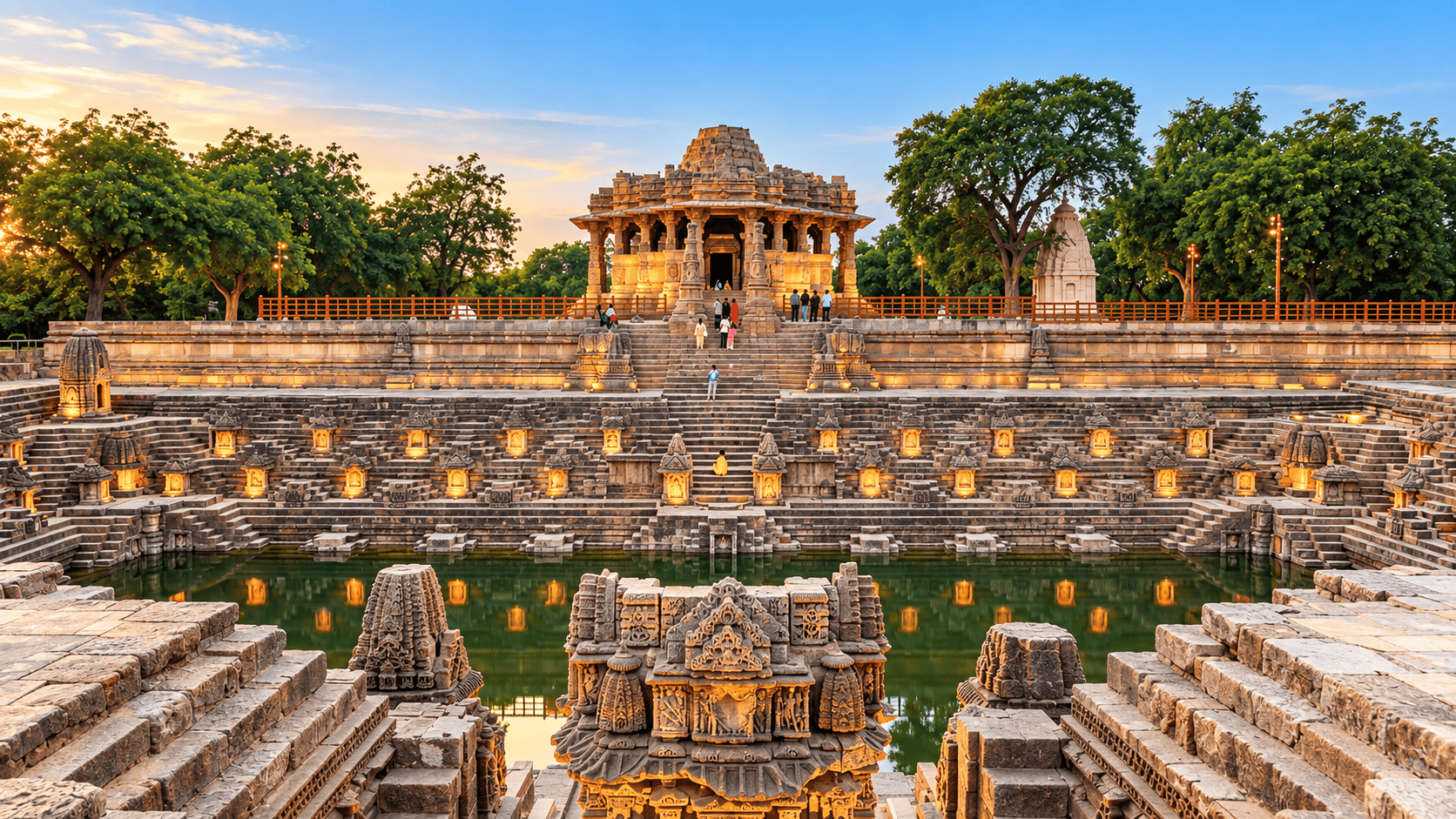
5. Sun Temple, Modhera
Built in the 11th century under the patronage of the Solanki dynasty, the Sun Temple at Modhera is less a place of active worship today and more a masterclass in ancient Indian engineering and artistry. Dedicated to the Sun God, Surya, the temple was designed with remarkable astronomical precision the main shrine is aligned so that the first rays of the sun on the equinoxes fall directly on the idol.
The temple complex includes three parts: the shrine itself, an assembly hall (sabha mandap) with elaborately carved pillars, and the striking stepped reservoir known as the Surya Kund, lined with more than a hundred small shrines. Every carved surface here from mythological scenes to floral motifs reflects the peak of Solanki-era craftsmanship.
The Modhera Dance Festival, held annually against the backdrop of the temple, is worth timing your visit around if you get the chance.
4. Ambaji Temple, Banaskantha
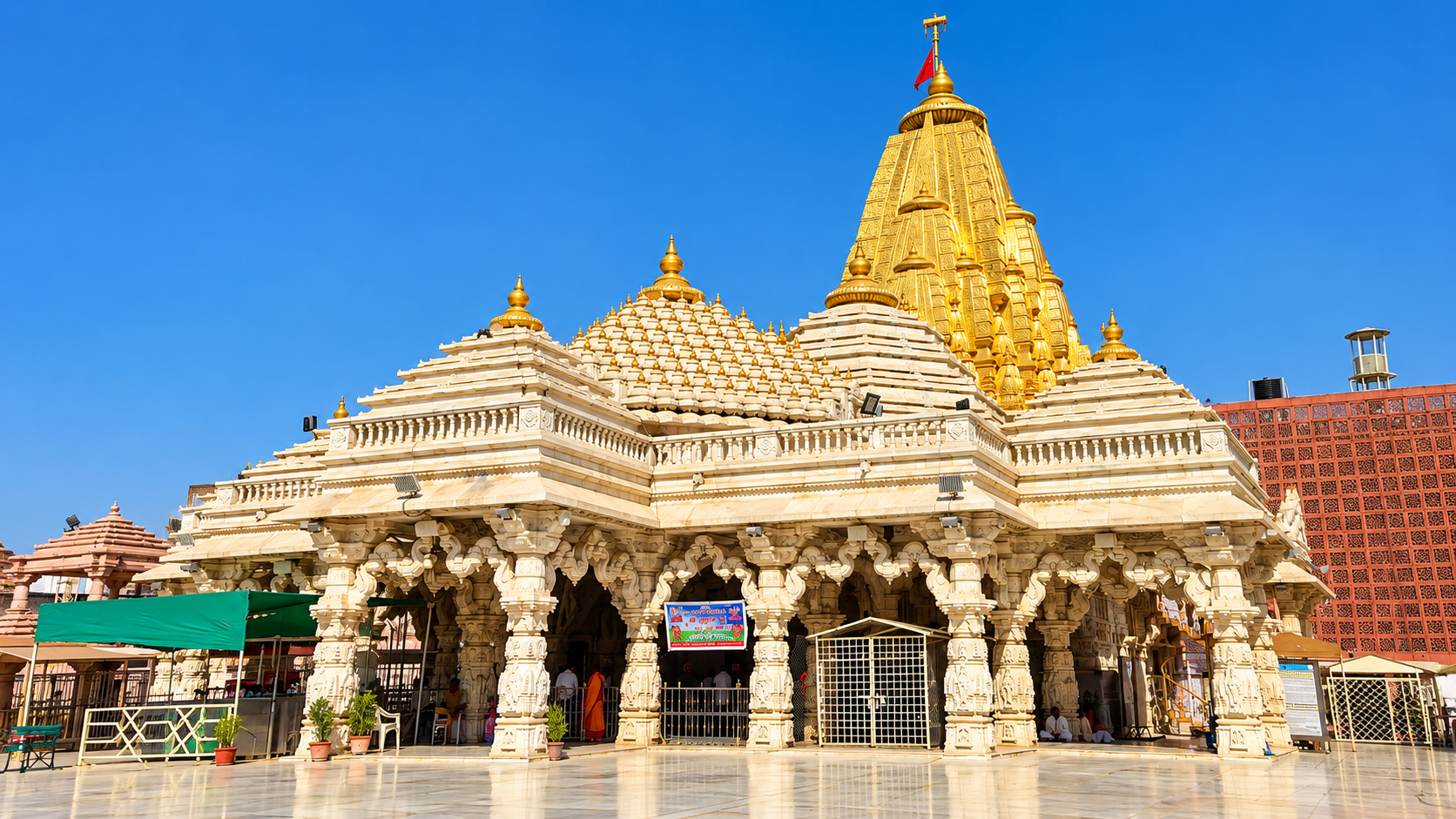
Tucked in the Aravalli hills of Banaskantha district, Ambaji Temple is one of the 51 Shakti Peethas sites believed to mark where parts of Goddess Sati’s body fell, according to Hindu mythology. Unlike most temples, the sanctum here doesn’t house an idol; instead, devotees worship a sacred yantra, a geometric symbol considered too powerful to be looked at directly, which is why it’s kept veiled.
Ambaji comes alive most dramatically during Navratri, when the temple town turns into a sea of devotees, music, and traditional garba performances that go on late into the night. Even outside the festival season, a steady stream of pilgrims many on foot from neighboring towns makes its way here throughout the year.
If you’re up for it, the nearby Gabbar Hill, accessible by ropeway, offers another shrine and a sweeping view of the surrounding hills.
3. Akshardham Temple, Gandhinagar
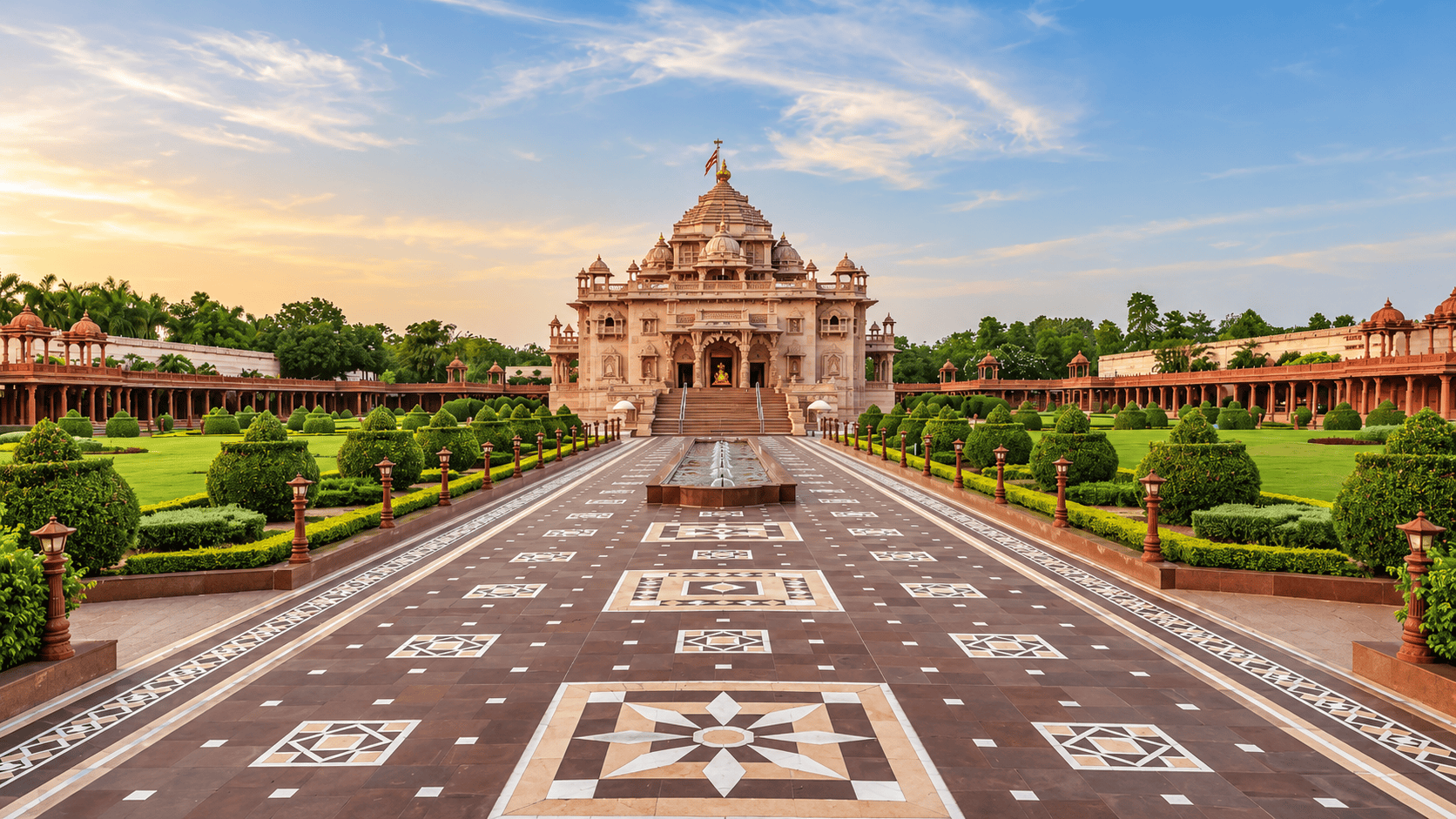
A striking contrast to the ancient shrines on this list, Akshardham Temple in Gandhinagar is proof that devotion can be expressed just as powerfully through contemporary craftsmanship. Built in dedication to Bhagwan Swaminarayan, the complex was inaugurated in 1992 and is spread across beautifully manicured gardens that make it feel more like a cultural campus than a single temple.
Carved entirely from pink sandstone, the main monument features detailed depictions of Indian mythology, saints, and dancers, while the surrounding exhibition halls walk visitors through Indian philosophy, culture, and spirituality using dioramas and audio-visual storytelling. It’s an ideal stop for families and first-time visitors who want context alongside their sightseeing.
The musical fountain show in the evening, set against the illuminated temple, draws large crowds plan to arrive a little early for a good spot.
2. Somnath Temple, Prabhas Patan
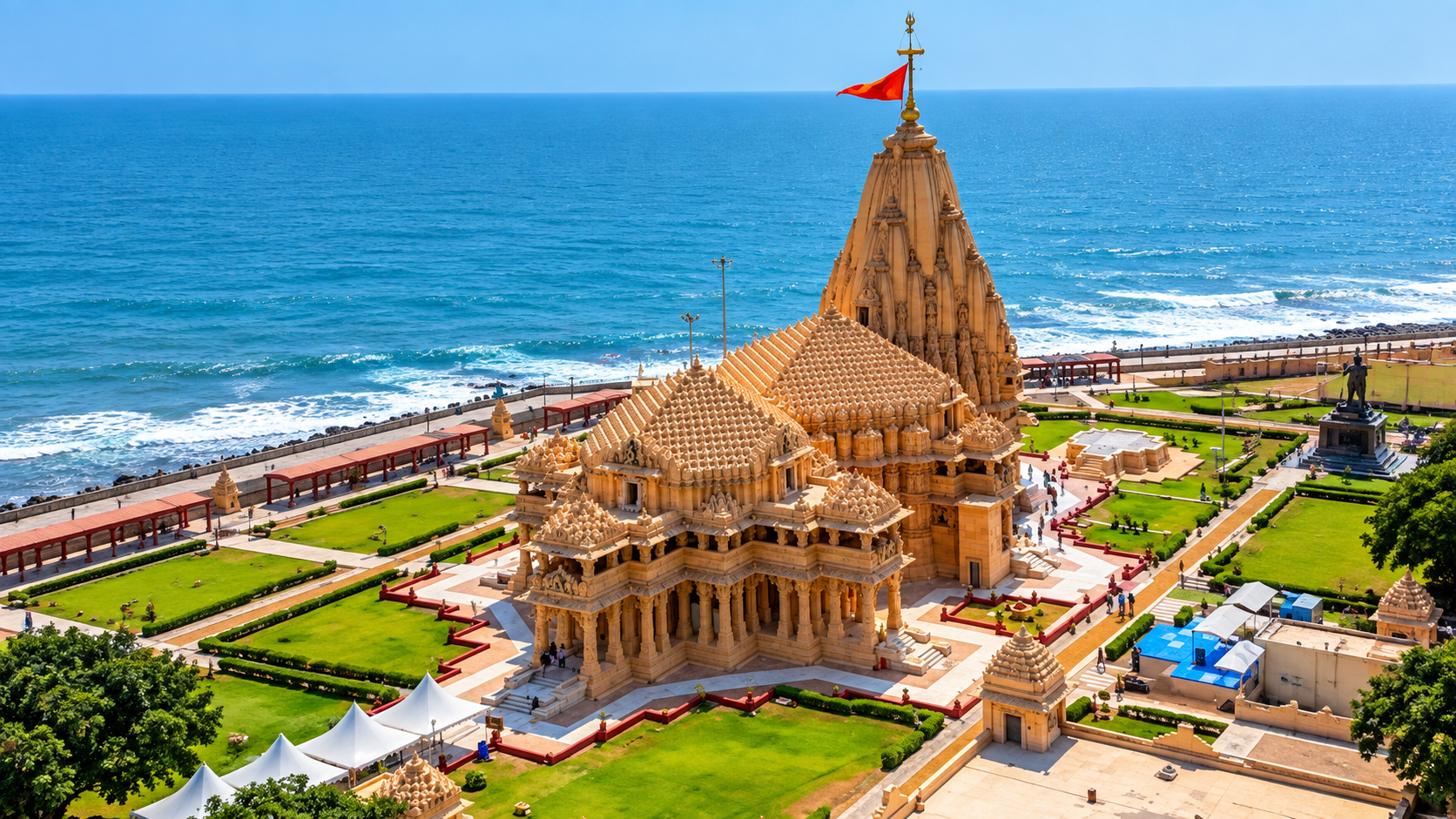
Standing at the edge of the Arabian Sea in Prabhas Patan, the Somnath Temple carries a story of resilience unlike any other shrine in India. It is the first among the twelve Jyotirlingas sacred abodes of Lord Shiva and its history reads almost like a saga: destroyed and looted multiple times over the centuries, and rebuilt each time by the faith of those who refused to let it disappear. The temple standing today was reconstructed in the Chaulukya (Solanki) architectural style, a hallmark of Gujarat’s medieval temple design.
There’s a reason people describe Somnath as having a different kind of stillness. Perhaps it’s the sound of waves right behind the sanctum, or perhaps it’s knowing that the very ground beneath your feet has witnessed so much and endured anyway.
Don’t miss the evening light-and-sound show, which walks visitors through the temple’s dramatic history against the backdrop of the sea.
1. Dwarkadhish Temple, Dwarka
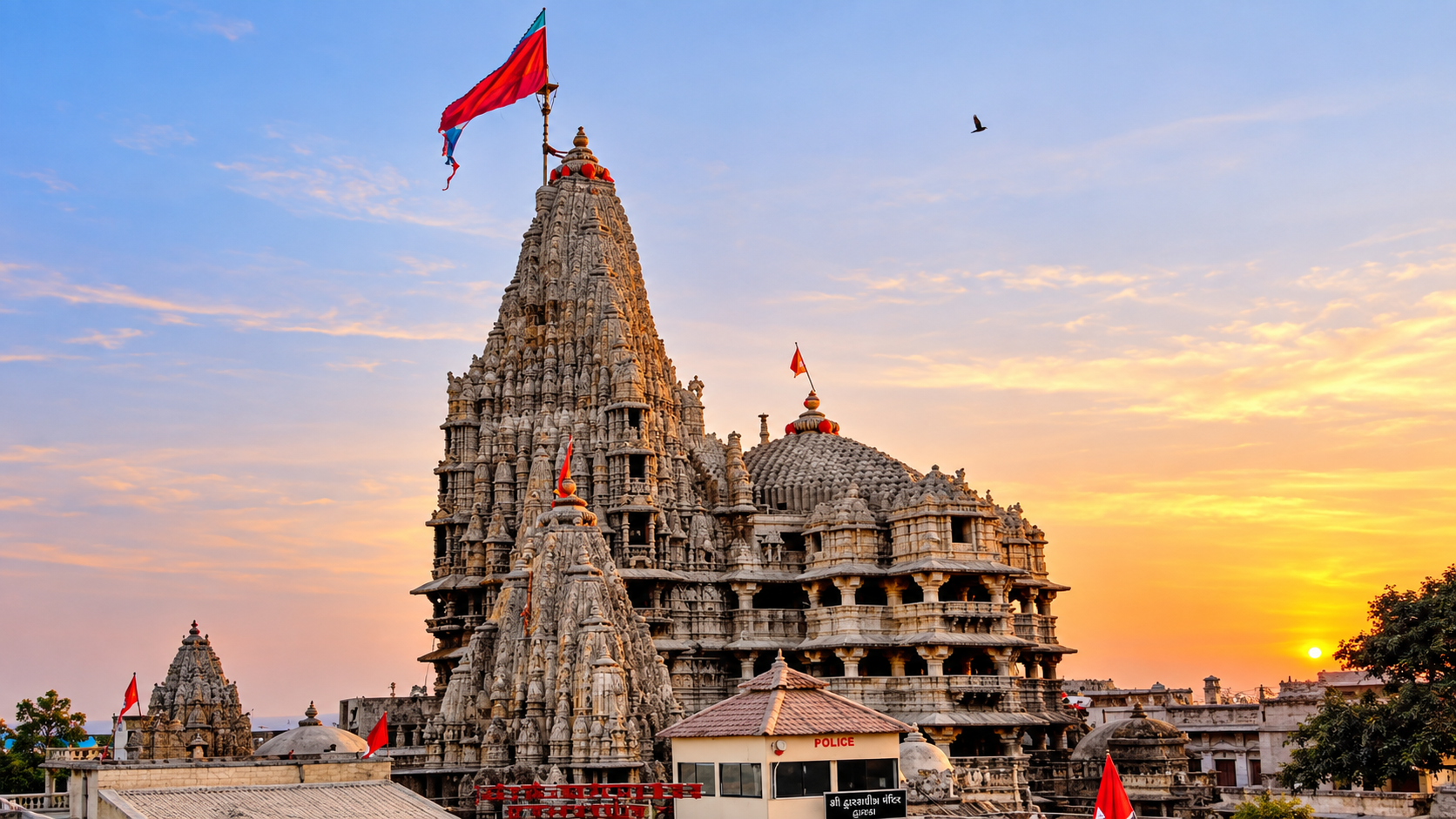
Right on the western tip of Gujarat, where the Gomti River meets the Arabian Sea, stands the Dwarkadhish Temple also known as Jagat Mandir. Dedicated to Lord Krishna in his form as the King of Dwarka, this temple is one of the most revered Vaishnavite shrines in the country and forms part of the sacred Char Dham pilgrimage circuit.
While the exact age of the current structure is debated among historians, the temple in its present form is generally believed to date back several centuries, with the site itself tied to a much older tradition connecting it to Krishna’s legendary city. The five-story main shrine, held up by 72 intricately carved pillars, is a sight in itself and climbing to the top for a view of the sea is one of the quieter joys of visiting.
Come here early in the morning for the mangala aarti, when the temple bells ring in unison and the whole town seems to wake up around the sound.
Gujarat has always held a proud place in India’s cultural map a land where devotion, architecture, and centuries of history come together in stone. Long before highways connected its cities, pilgrims were already walking dusty roads toward its temples, drawn by stories of gods who are said to have walked this very soil.
What makes Gujarat’s temples special isn’t just their age or their grandeur it’s how each one tells a different chapter of the state’s story. Some carry the weight of mythology, some survived invasions and rebuilding after rebuilding, and some are entirely modern yet feel timeless the moment you step inside. If you’re planning a spiritual trip through Gujarat, here are the temples that belong at the top of your list.